SPACE MATERIALS · UNDERGRADUATE RESEARCH
Lunar simulant composites
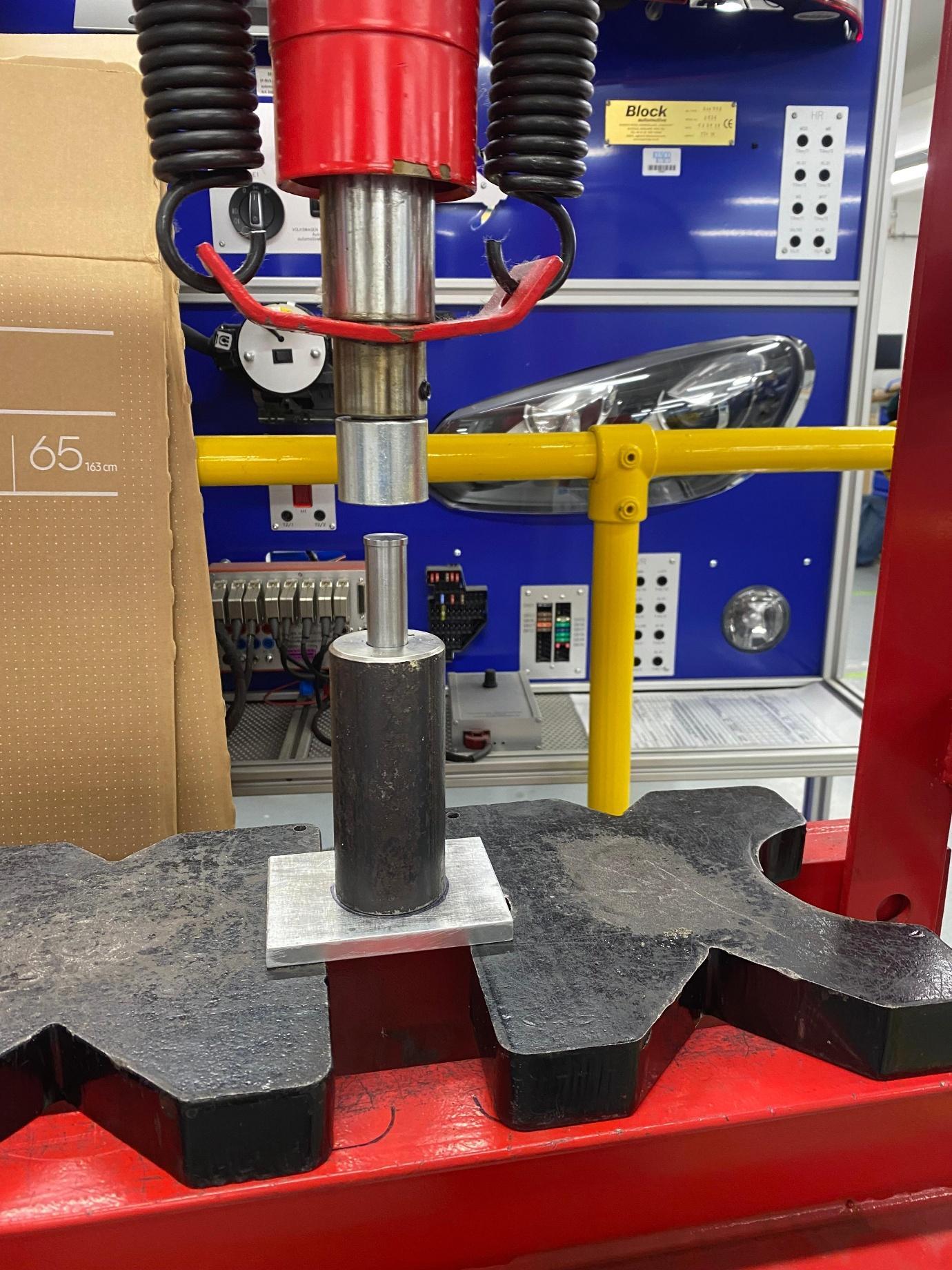
Exploring LHS-1 lunar simulant, sand and epoxy through specimen preparation, compression testing and fracture observations.
- Original machine records
- 6 compression runs 4 main conditions · 2 marked failed
- Highest recorded peak
- 20.55 kN from the raw machine export
One run per labelled condition. Resin and sand co-varied; lunar service suitability was not demonstrated.
Results, contribution & limitations
My contribution. Specimen preparation and compression testing, followed by interpretation of fracture observations and SEM imagery with specialist support.
What the data can say. Six original machine exports dated 27 March 2025 preserve four main labelled conditions and two runs marked Fail. All six peak loads reconcile with their recorded traces. Calculated substitute rows are excluded from the experiment count.
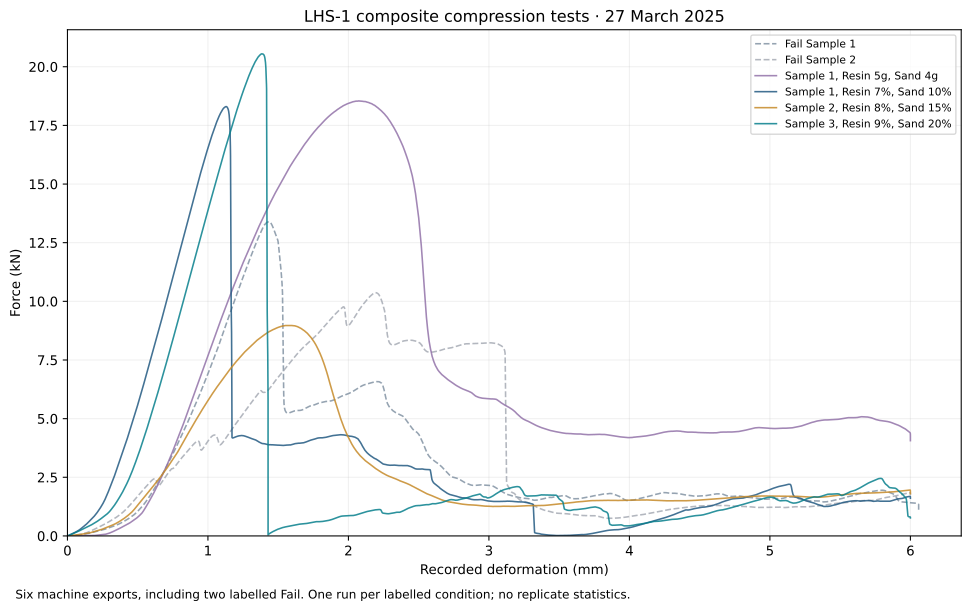
Interpretation. The highest recorded force is 20,548.95 N, shown here as 20.55 kN. The supplied portfolio PDF uses the coarser rounded report value of 20.50 kN. Neither a statistical optimum nor a qualified material allowable is established.
Next step. Reconcile binder recipes and specimen labels, repeat controlled formulations, then define relevant environmental testing.
Open the test chart ↗